 1300 466 398



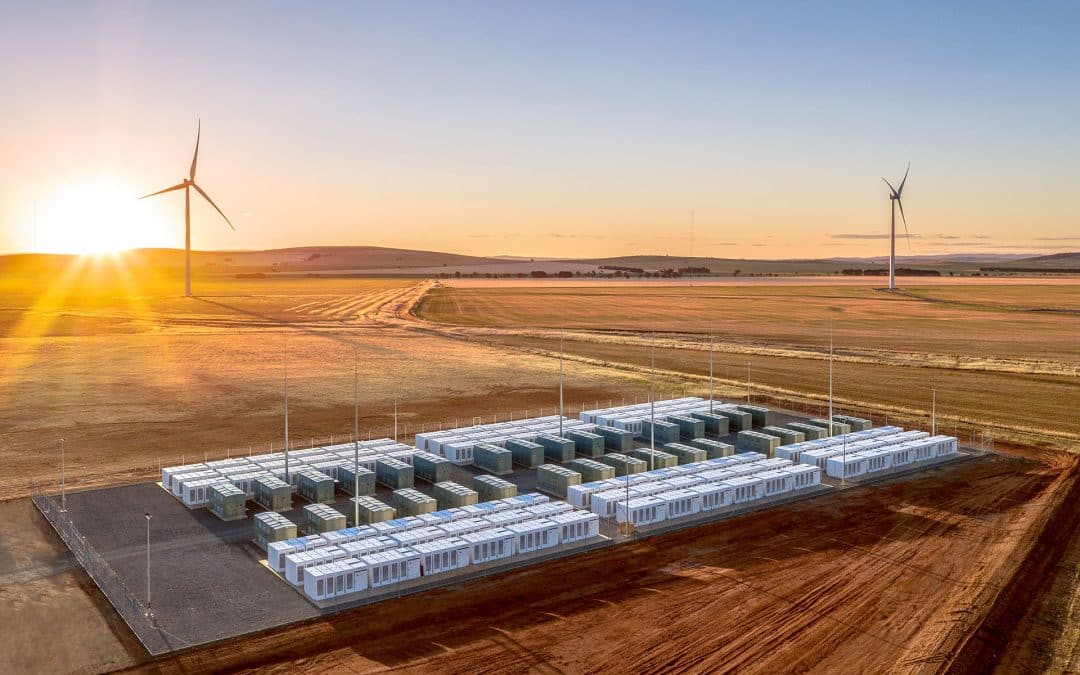
As Australia’s energy landscape evolves, one technology is increasingly stepping into the spotlight: battery storage. For businesses aiming to control costs, increase resilience, and move towards sustainability, batteries are no longer optional, they are becoming essential. Below we explore why battery uptake is accelerating, the current landscape, cost-benefits, and real-world applications for businesses of all sizes.
What’s driving the battery boom?
Several factors are converging to make batteries a compelling investment for businesses:
- Volatile electricity prices: Renewable generation means electricity supply can spike on sunny or windy days, then drop dramatically. This causes frequent price swings in wholesale markets. Batteries enable businesses to store cheaper energy during low-price periods and use it when prices rise.
- Strong investment momentum: In Q1 2025, Australia committed about AUD 2.4 billion to large-scale Battery Energy Storage Systems (BESS). That investment translated into roughly 1.5 GW of new storage capacity and about 5 GWh of energy output. This represented one of the strongest quarters ever for storage investment.
- Faster uptake of smaller storage + commercial systems: The Australia battery market was valued at about AUD 2.31 billion in 2024, with strong growth projected (~9.7% CAGR) from 2025-34. Meanwhile, Australia had over 140,000 battery installations by mid-2024 (residential and small commercial combined), up significantly year-on-year.
- Policy support & regulatory change: Government programs, incentives, and schemes like the Cheaper Home Batteries Program and the Capacity Investment Scheme (CIS) are pushing renewed attention toward energy storage. Such programs often offer revenue certainty or subsidy support, lowering the financial risk for businesses investing in batteries.
What businesses stand to gain
Here are the primary benefits businesses are getting when they make battery storage part of their energy strategy:
- Reduced energy costs and peak demand charges
When businesses can shift consumption from expensive peak periods using stored energy, they can avoid or reduce peak demand surcharges from the grid. Over time, this can lead to substantial savings, particularly for businesses with large, variable loads. - Greater energy resilience & reliability
Outages, grid instability, or supply constraints can harm operations, spoil perishable goods, or force downtime. Batteries offer backup power, smoother transitions, and more control over when and how energy is used. - Support sustainability / ESG goals
With growing pressure from investors, regulators, and customers, businesses are increasingly expected to reduce emissions. Batteries allow for greater self-consumption of clean energy (e.g. from on-site solar), reducing reliance on fossil fuel power and lowering carbon footprints.
The current picture in Australia
To give you a sense of scale:
- The total energy storage market was ~4.0 GW in 2024. It’s forecast to grow to 17.8 GW by 2033, with an annual growth rate of ~18%.
- Large-scale battery systems under construction are also growing fast: there was 7.8 GW of utility-scale battery storage under construction in Australia around 2024.
- Residential and small commercial battery installations are increasing: for the first half of 2024, Australia recorded just under 30,000 battery sales and crossed 140,000 total battery systems installed.
- The financial performance of batteries is improving. As noted, revenues for grid-scale systems have benefitted significantly from market volatility. Investment returns are more attractive now than in recent years.
What to consider before investing
Before a business jumps in, there are several considerations to ensure battery storage delivers the intended benefits:
- Understand your load and usage profile: Businesses with high peak demand or pronounced variation in consumption benefit more. If your usage is more steady and low, the payback period may be longer.
- Duration of storage: How many hours of discharge do you need? Short duration (e.g. 2-4 hours) may be enough for peak shaving; longer durations are better for backup or load shifting.
Integration with renewables: Combining batteries with on-site solar (or other renewable inputs) maximises value. When the sun is shining, solar + battery systems let you store the excess instead of exporting at low feed-in rates. - Regulatory environment and incentives: Many state and federal policies are in flux. Be aware of available grants, subsidies, or programs (such as the CIS) that can de-risk some of the capital cost.
- Grid constraints and interconnection costs: Some proposed battery projects face constraints due to transmission capacity, connection costs, or regulatory hurdles. These can impact both cost and performance.
Real-world business examples & use cases
Here are how businesses are already using batteries:
- Industrial & Manufacturing Sites: Facilities that run energy-intensive processes often use batteries to avoid peak demand charges or shift load to cheaper times.
- Logistics and Warehousing: For sites with refrigeration, EV charging, lighting, and standby power, battery systems help flatten demand peaks and reduce risk of high charges during supply stress.
- Retail and Hospitality: Especially for chains, shops, or venues with high evening lighting and signage loads – storing energy from daytime to use during peak rates or nights can make a real difference.
- Remote / Critical Infrastructure: For businesses in regional areas, or those with critical power needs (medical, data centres, etc.), batteries offer reliable backup options and risk mitigation.
Challenges & what to watch out for
While batteries offer many benefits, some hurdles remain:
- Upfront capital cost: Battery systems require investment – capital expenditure, installation, maintenance. The payback periods vary depending on usage, load profiles, incentives, and local electricity tariffs.
- Regulatory and connection complexity: Connecting large battery systems to the grid often involves regulatory approvals, network service provider agreements, and sometimes dealing with grid constraints. These can introduce delays and extra costs.
- Technological risks and lifecycle: Batteries degrade over time, so understanding performance warranties, replacement costs, and the overall lifecycle is important.
- Revenue variability: Markets with volatile prices may offer opportunity, but revenues for storage also depend on capturing those peaks, being available when needed, and avoiding being constrained off by the grid. As noted in some NSW battery projects, grid constraints in April 2025 meant missing out on thousands of dollars per MW of income.
What this means going forward
Looking ahead, batteries will continue to become more central in business energy strategies:
- The role of battery storage will grow under programs like the Capacity Investment Scheme, which is helping secure clean energy and storage capacity.
- As battery costs fall and more businesses gain experience with deployment and operation, we expect payback periods to shorten, making storage investment viable even for smaller businesses.
- The growth of Virtual Power Plants (VPPs) and coordinated consumer energy resources (CER) is another trend: aggregated battery systems may offer new revenue streams and flexibility.
For Australian businesses, battery storage is transitioning from promising technology to essential infrastructure. Whether your goal is cost predictability, sustainability, resilience, or a combination of these, batteries deliver value, when implemented thoughtfully.
At Next Business Energy, we help businesses assess whether battery storage makes sense for them. From analysing usage patterns, recommending optimal system sizes, securing financing, to designing integration with renewables, we’re here to make the energy transition work for business.